

Preventing Dementia
Real life tips for growing old with your brain intact.

Since the beginning of the 21st century, the American population are living much longer. This is great if your body and brain remain healthy. But when your life expectancy has increased by 20 years, but your health habits haven’t improved, be prepared for decades of a very low quality of life. Because of this increased life span/unhealthy habit combo, dementia is hitting Americans at an all-time high.
In the ignorance of youth, I had little concern for the health of my brain. Who the hell thinks about being old? I liked having fun, and admittedly, I was avoiding some rough emotions, so practical advice about how to treat my brain or body in a healthy manner had little traction. I wasn’t an addict, but I enjoyed drugs and alcohol, and youth suspends cautionary alarm.
I have been either the primary help, or on call for all decision making and practical executions, for my and my husband’s parents for the past 20 years. At 86, my mother-in-law is the last one living. We have been looking after our parents’ generation longer than they looked after us. I now see so clearly how holding on to your brain health is not optional, but an absolute necessity if you want to grow old without becoming a burden on your family or society.
Like many other middle-aged people today, my husband and I have been sandwiched between our Me Generation parents and our Gen Z teenager, and it fucking sucks. Our needs come second or third, and we don’t have enough money to circumvent this. We understood having a child would require putting our child’s needs first for many long years. We didn’t make that deal with our parents.
My husband and I were both ejected from our homes as young adolescents, he to a boarding school, and me, to the streets. This is complicated by the fact that, while my husband and I changed drastically in emotional maturity and approach to life during all those decades, our parents did not. They viewed self-awareness as weakness. Interacting with them has meant working around their inability to relinquish control, while managing and validating their feelings for them. Totally exhausting.
One of the most difficult aspects of the obligatory relationships with the older generation is caring for someone with dementia. And sometimes even witnessing what is going to cause their dementia before it happens. Unfortunately, we are powerless to change the habits of another adult, even habits that will exacerbate memory loss and leave them living in adult diapers and needing 24/7 care.
Our society’s sycophantic relationship with the insurance industry means that bodies are being kept alive that in the past would expire naturally. This is not only the standard of care (doctors must complete a daunting checklist of evaluations for elderly patients to avoid malpractice), but also the rapacious insurance industry milking old people’s bodies in order to profit from expensive tests on them, which typically prove nothing.
My husband and I actively keep our brains and bodies robust, because we do not want our son to undergo the crushing responsibility of taking care of us for decades in old age. We desire to remain independent, and helpful to he and his family in the future.
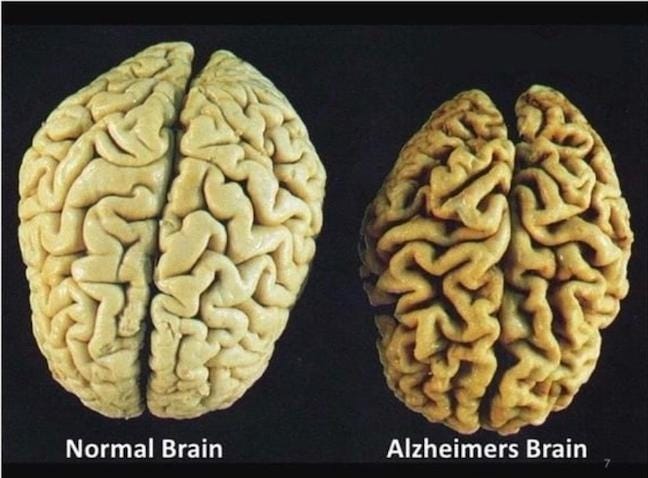
Don’t be the elderly adult who is a burden on your family and society. Here are some of the things I’ve learned in the trenches about helping prevent dementia:
· Keep socializing. The brain activity found in spending time with other people, in person, is the number one defense.
· Move your body every day. Walk, dance, or have a mild fitness routine. The health of the body supports the health of the brain, because the brain is part of the body.
· Lower your stress level. Stress fries the brain and damages blood vessels, reducing cognitive capabilities.
· Self-awareness is not weakness. Deal with your difficult feelings. The more your thoughts and feelings are unresolved, the more your brain is primed into forgetting.
· Engage in intellectual activity. Do things that make you think, and challenge your brain. Reading, journaling, studying, discussing ideas with other people.
· Change your habits sometimes. While humans love routine, switch it up intermittently so you don’t get locked in a brain rut.
· Unless it’s an occasional drink, smoke, or other high, give up drugs and alcohol. The longer you are dependent on substances, the more likely you will develop dementia.
· Eat mostly unprocessed food, preferably a plant-based diet sufficient in healthy fats. The sugars in processed food disrupt your metabolism, and toxins in commercial meats wither your brain.
· Say yes to things that take you out of your comfort zone. Staying forever in your comfort zone does little to create or strengthen neural pathways. Plus, you will gain new feelings of confidence.
· Get involved in a creative activity. Creative pursuits expand the brain’s functionality. You don’t have to be an artist. All humans have creative capacity.
· Help other people. This goes beyond giving money (although that is great). Get out there and find purpose outside of yourself.
· Don’t hoard up or filthify your home. Open windows and keep fresh air moving inside. Don’t make your home into the place you will die. Think of it as the location that will support your long, mentally acute life, and respect it as that.
· Old brains can learn new tricks (unless they’re too senile). Learning new things keeps brains agile.
For an in-depth story about a son fighting time to communicate with his father, who is sinking into dementia, I recommend my husband Michael’s graphic memoir, All the Answers.
Powerful piece. The point about how dealing with unresolved emotions primes the brain for forgetting is underrated in most dementia discourse. I've watched relatives literally choose avoidance over introspection for decades, and the cognitive decline was inseperable from that pattern. The bit about not letting comfort zones calcify also connects to research around neuroplasticity maintenance.
Great read today. I agree on all points. It was the lack of these things that ended my mother and I am making damn sure it does not end me.